
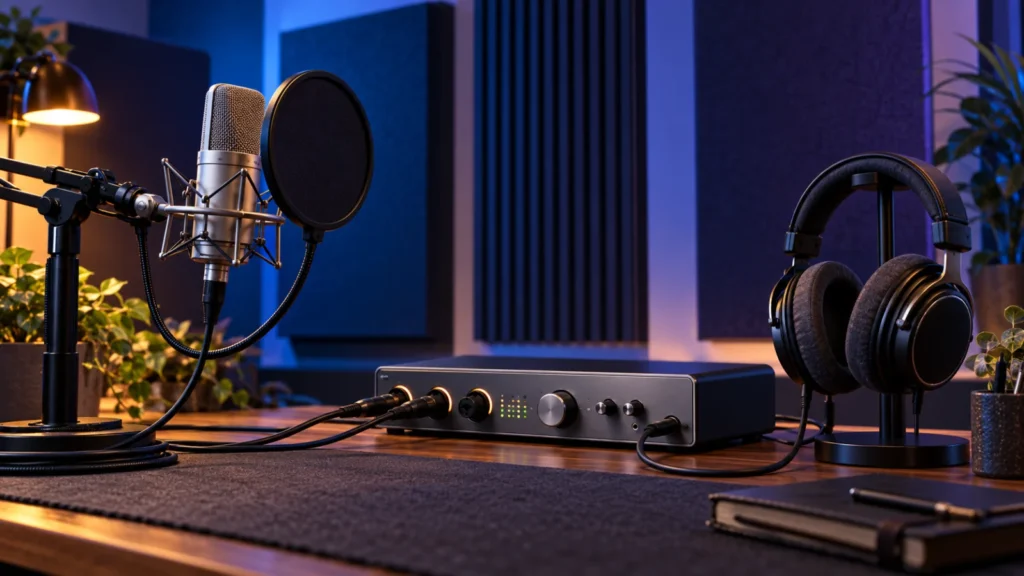
Understand the chain. Preserve the message.
Work from a usable source toward a file another operator can play and understand. Use authorized practice material, comfortable listening levels and reversible edits. Treat a successful export as the beginning of delivery verification.
Learning stage 1
Record & edit
Objective: Trace a clear source and preserve editorial meaning.
- Record a Voiceover That Gives the Editor Room to Work
- Edit Radio Speech for Clarity Without Changing Its Meaning
- Trace an Internet Radio Signal From Presenter to Listener
Activity: Draw the signal path and record what each meter can prove.
Next step: Keep a short result log and return to the lesson behind any unresolved question.
Learning stage 2
Mix & deliver
Objective: Support speech and verify the real exported file.
- Mix a Music Bed Under a Voice Without Losing the Message
- Loudness for Radio Imaging: Match the Destination, Not a Universal Number
- Deliver a Radio Imaging Package Another Operator Can Use
- A Quality-Control Pass for Every Radio Audio Export
- Codec, Bitrate and File Format: Choose Audio Delivery With Context
Activity: Compare a voice-only and produced version at comfortable matched levels.
Next step: Keep a short result log and return to the lesson behind any unresolved question.
Learning stage 3
Operate & preserve
Objective: Plan fallback, permissions and a recoverable archive.
- Automation Needs a Fallback Plan, Not Just a Playlist
- Why Radio Archives Matter in a Streaming Era
- Map Music Permissions Before Building a Radio Playlist
- A Secure Voice Generator Needs Limits as Well as a Generate Button
- When the Voice Generator Is Unavailable, Keep the Production Process Honest
Activity: Write a failure checklist without credentials or unverified service claims.
Next step: Keep a short result log and return to the lesson behind any unresolved question.