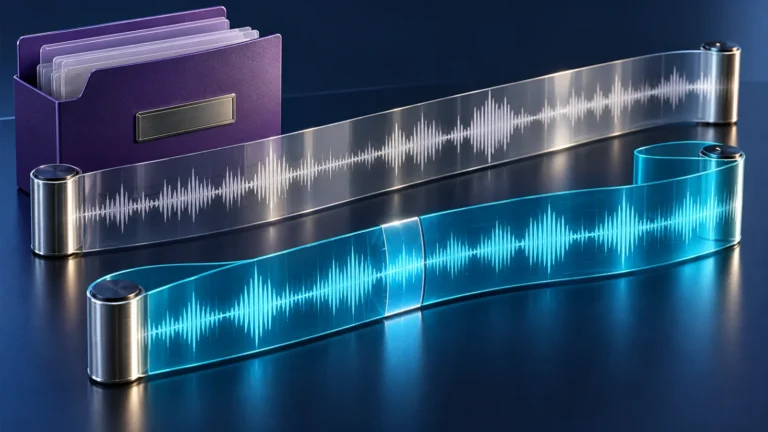
A useful voice recording is more than a strong performance. It gives the editor a clear source, understandable versions and enough context to make appropriate choices. Good preparation reduces the temptation to repair every problem later with aggressive processing. Start with the approved message and a recording environment that supports the voice.
Prepare the script and the space
Confirm names, pronunciation, numbers and the intended delivery before recording. Mark unresolved factual information for approval rather than improvising it. If a script changes during the session, preserve the revised version so the editor does not work from an outdated text.
Listen to the room for ventilation, traffic, computer fans and distracting reflections. Microphone choice and placement matter, but no microphone automatically removes the environment. Follow the microphone and interface documentation for power, connections and gain. Reduce monitoring levels before changing the setup.
Make a representative sound check
Ask for a passage that reflects the likely range of the performance. Set a manageable recording level with room for normal variation, then listen to an actual recorded sample. A moving meter proves that a signal is present; it does not establish that the recording is clear or free of distractions.
Check plosives, breath, mouth noise, room sound and consistency of distance. Make practical adjustments before recording the entire script. Do not ask a performer to strain or adopt an uncomfortable posture merely to match an equipment arrangement.
Capture useful alternatives
Record a small number of intentional variations with clear labels. One may be more conversational and another more energetic, but each should preserve the approved meaning. Explain the difference so an editor can select for purpose instead of comparing a pile of nearly identical files.
Leave sufficient space around the take for editing and any relevant natural room sound. Avoid cutting a word or breath at the recording boundary. Keep a clean source version before applying processing that cannot easily be reversed. Confirm whether the recipient wants raw recordings, edited selections or finished production.
Hand over the performance responsibly
Include the current script, take notes, file format and any usage restrictions. Identify which version is approved and which alternatives remain exploratory. Obtain the necessary permission to record, process and distribute the performance; a voice appearing in a session is not automatic permission to build a synthetic model from it.
Listen to exported files and reopen the delivery package before sending it through an agreed channel. Key takeaway: recording with the editor in mind means preserving a clear source and a traceable decision record. Good preparation makes later production more flexible without promising that software can rescue any recording.
Sources & further reading
Source review: October 29, 2026. This is a researched educational feature, not an interview or a claim of firsthand testing. Legal, health and business decisions require context-appropriate professional guidance.